Catching up with Michael Szalaty, Chefs Bay: why kitchen wellbeing is hitting the bottom line
Last-minute no-shows may feel like operational bad luck - but they're often the end result of deeper issues. We caught up with Michael Szalaty of Chefs Bay to understand why staff wellbeing is becoming one of hospitality's most important commercial levers.
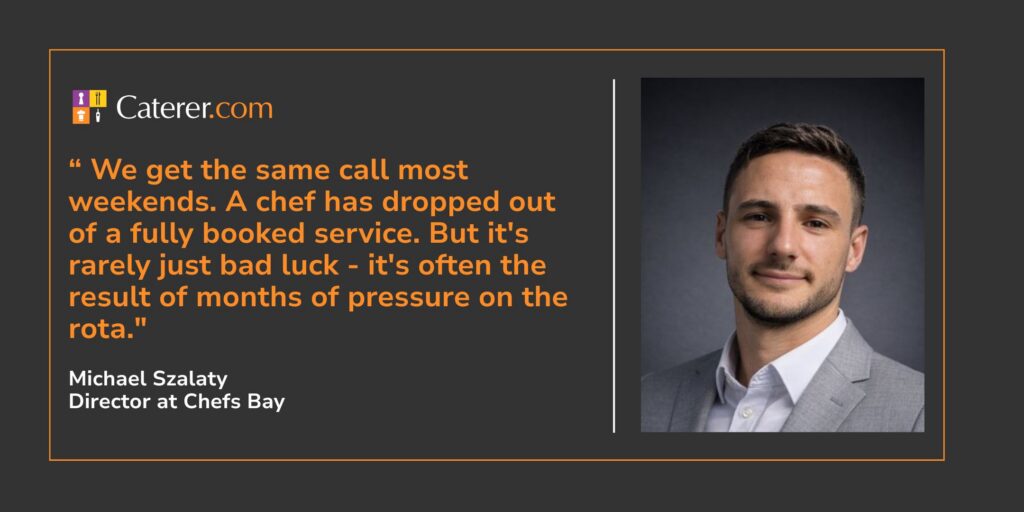
Staffing gaps might feel like a short-term problem, but according to Michael Szalaty of Chefs Bay, they're usually a sign of something more structural.
The real cost of ‘getting through service’
Running a shift short might seem manageable in the moment, but Szalaty warns the real cost comes later.
“You might save on wages that day,” he explains. “But three months later, the chef who covered that pressure leaves and that’s the bill operators don’t always factor in.”
With hospitality turnover the highest of any UK sector, that churn quickly becomes a major financial and operational challenge. Recruitment costs, lost productivity and service disruption all add up, especially as wage pressures continue to rise in 2026.
No-shows are a symptom, not the cause
While last-minute absences create immediate disruption, Szalaty is clear they’re rarely the root issue.
“Burnout, long hours and understaffing build up over time,” he says. “A no-show is often the point where those pressures finally surface.”
The scale is hard to ignore: a 2026 Burnt Chef Project study found 69% of chefs often or always think about leaving.
The impact is measurable. A missing chef on a busy shift can quickly translate into £525 to £875 in lost contribution before factoring in overtime or inefficiencies during service.
Pay gets attention but culture keeps people
Pay remains a key driver of movement in the market. Caterer.com’s 2026 salary research found that 51% of hospitality workers are planning to look for a new job to earn more.
“Pay gets people looking,” he says. “But it’s not what makes them stay.”
Strong teams, supportive managers and clear progression all play a bigger role, alongside fair rotas and realistic workloads.
“You can match the highest rate locally and still lose staff to a kitchen with a better working environment,” he adds.
Small changes, big impact
Encouragingly, many of the most effective retention levers are operational rather than financial.
“Publishing rotas in good time, having enough people on shift and recognising when someone steps up – these things matter,” says Szalaty.
“They improve morale, reduce burnout and ultimately protect your bottom line.”
Fix the rota, not just the shift
For Szalaty, the pattern is clear across the operators Chefs Bay supports.
“The kitchens calling us every weekend for cover are usually the ones running permanently short,” he says. “Agency cover gets you through Saturday, it doesn’t fix what’s causing the problem.”
As cost pressures continue, he believes the most resilient operators will be those who treat wellbeing as a core business metric.
“The best-run kitchens track team health the same way they track food cost,” he says. “Because in the end, it all feeds into the same number.”
Find out more from Chefs Bay on what hospitality staffing really costs in 2026 and how better staffing strategies can support your team and your bottom line.